What Is a Petit Four? Meaning, History, Types and How to Serve Them
Ask ten people what a petit four is and you will hear ten answers: a tiny cake, a bridal shower square, a cookie on a tea tray, a savory bite at a cocktail party. They are all partly right. This guide explains what a petit four is, where the name comes from, the main types, and how to serve petits fours today.
A petit four is a small, bite sized confection or savory appetizer. The name is French for "small oven."
Petit Four Meaning: What the Name Really Says
Most people assume "petit four" describes size. It does not. The name describes the oven. "Petit" means small and "four" means oven, and the phrase refers to a baking technique, not to the pastry's dimensions.
A few quick answers people search for:
Plural: petits fours. In French, both words take the plural form.
Pronunciation: the French say it roughly as "puh tee foor." In North America it is often said as "PET ee for." Both are understood.
Other names: the French pâtisserie trade often uses mignardises for assorted small sweets. In England they are called fancies, and in the prairie provinces of Canada, dainties.
A Short History of Petits Fours
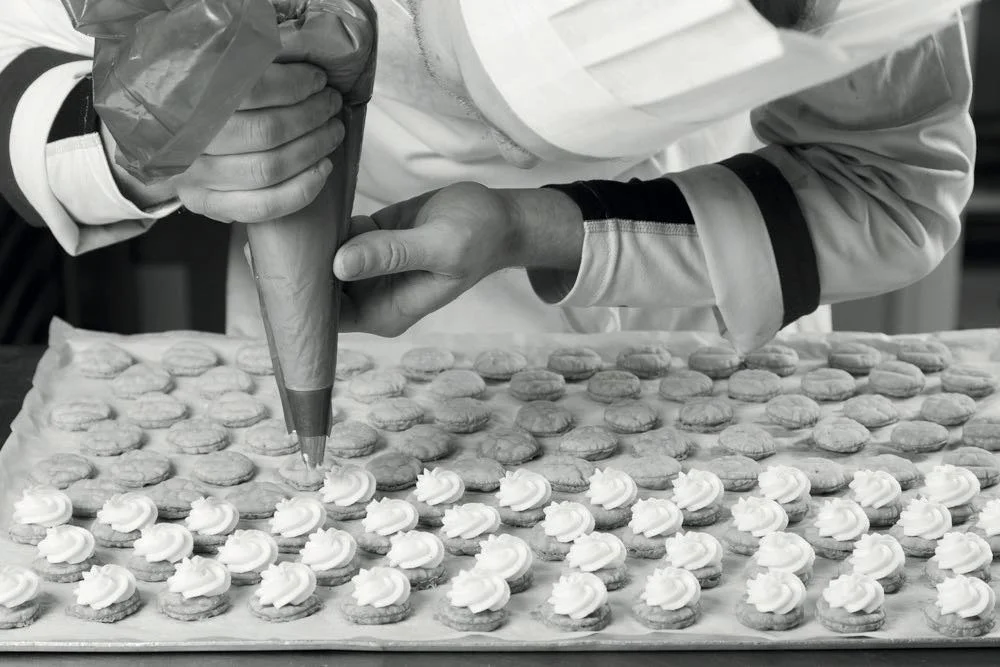
Petits fours are still built one piece at a time, by hand.
In eighteenth and nineteenth century France, bakers worked with large brick or stone ovens, heated with wood or coal. Those ovens held heat for hours after the bread came out. Bakers did not want to waste that stored heat, so they used it to bake smaller, more delicate pastries. Baking this way was called baking à petit four, literally "at small oven."
Food writers give two explanations for the name. Larousse Gastronomique credits the nineteenth century pastry chef Carême, who explained that these small pieces were baked at the end of an oven's useful heat, when only small items would cook through. The Oxford Companion to Food, by Alan Davidson, suggests the name could refer to a small oven used specifically for them. The first explanation is the more widely repeated, and it matches how wood fired bread ovens are still used.
By the 1960s in America, petits fours were best known as small fondant covered sponge squares at bridal showers and birthday parties. That image still shapes how many people picture them. Bake magazine describes a modern renaissance in which pastry chefs moved away from pastel fondant toward new flavors, textures and layers.
Types of Petits Fours
"Petit four" is a family, not a single pastry. Reference sources describe three classic varieties, and French pastry also uses a fourth word, frais, for fresh pieces.
Petits Fours Glacés (Glazed)
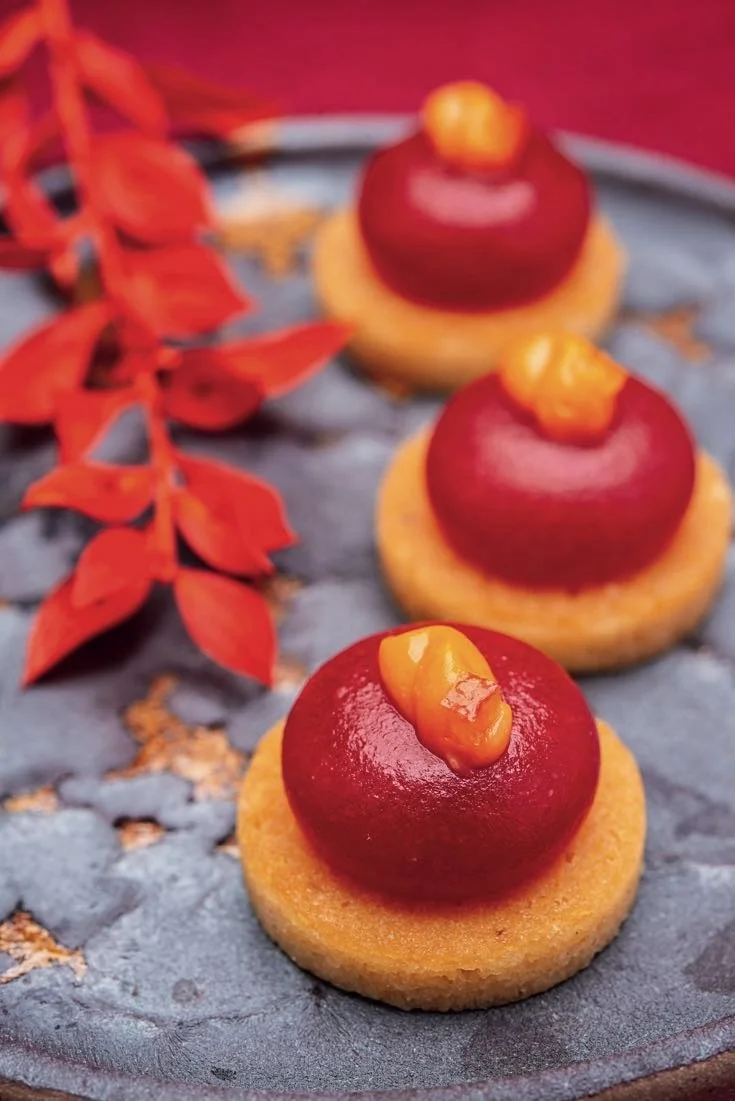
Glazed petits fours: precision finishing at a miniature scale.
"Glacé" means glazed. These are the pieces most people picture first: tiny cakes and tartlets covered in fondant, icing or glaze and decorated with care. Small éclairs and tartlets are often counted here too.
Petits Fours Salés (Savory)
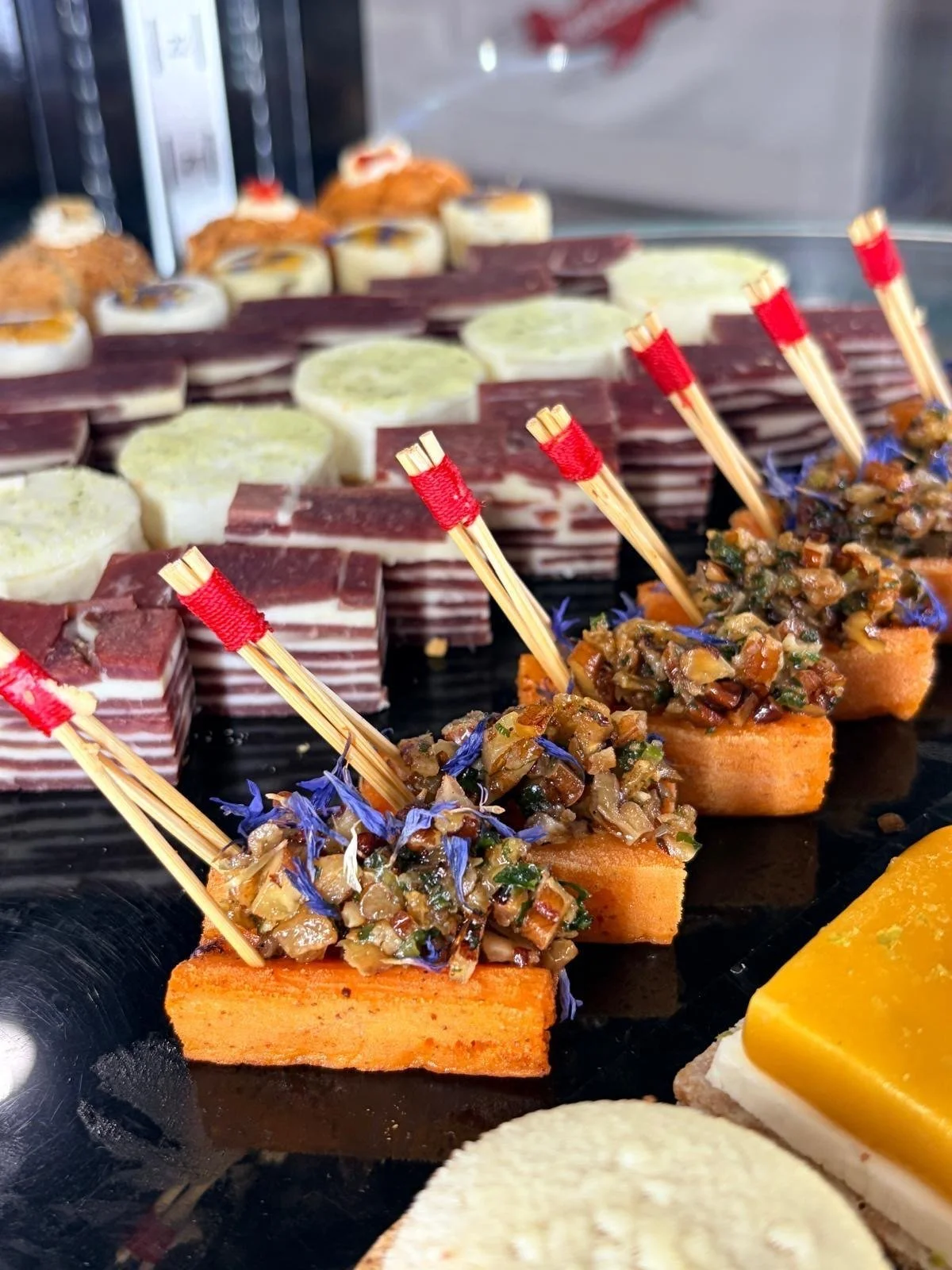
Savory petits fours, served at cocktail hours and receptions.
"Salé" means salted. These are savory, bite sized appetizers, usually served at cocktail parties and buffets. In modern catering, they are the family behind most hors d'oeuvres: small puffs, cheese bites, tartlets and canapés.
Petits Fours Secs (Dry)
"Sec" means dry. This family covers dainty biscuits, baked meringues, macarons and puff pastry pieces. They are made to keep better than creamy pieces, which makes them a classic for tea trays and gift boxes.
Petits Fours Frais (Fresh)
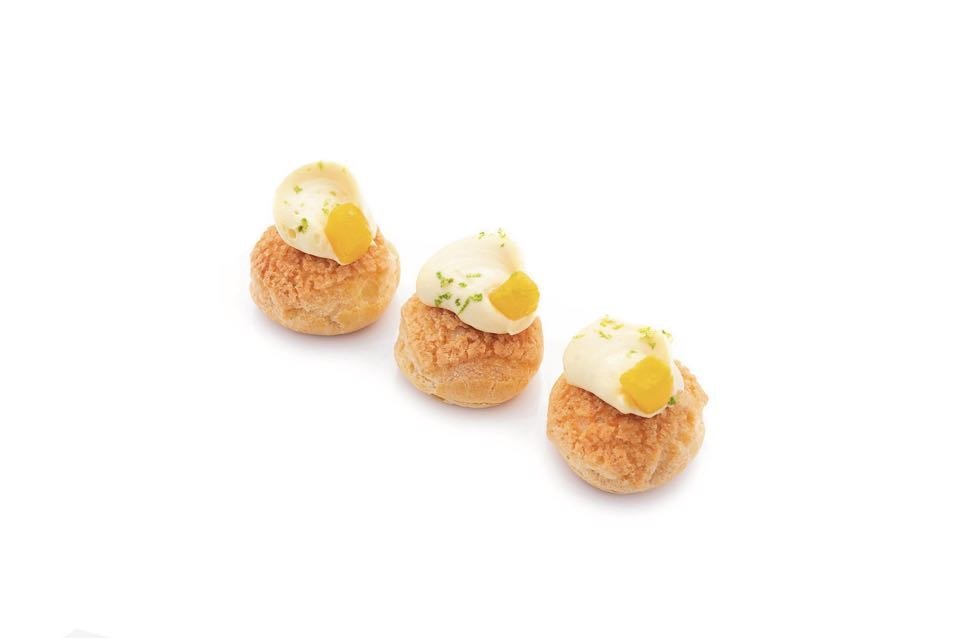
A fresh style petit four: mango passionfruit mini puff.
"Frais" means fresh. The French dictionary Larousse describes a petit four as a small cake, fresh or dry, or a small savory appetizer eaten in one bite. Fresh pieces are the creamier ones, such as small cream filled puffs and mousse based desserts.
Petit Four or Mignardise?
The two words overlap, and many people use them as synonyms. A common distinction is that a petit four is baked, while a mignardise is any small sweet served at the end of a meal, including chocolates, mousses or fruit preparations that never see an oven. In many upscale restaurants, a small plate of mignardises arrives with the check or the coffee. Whatever the label, the idea is the same: a few perfect bites.
What Makes a Good Petit Four
Bake magazine makes a point that every pastry chef will recognize: a petit four should be small enough to eat in one bite. A shrunken slice of cake that needs a fork is a mini dessert, not a petit four.
The small scale is also what makes the craft visible. On a full sized cake, a slightly uneven glaze disappears into the rest of the dessert. At petit four scale, every detail shows. The finish has to be exact, because there is nothing bigger to distract from it. That is why petits fours remain a benchmark of pastry skill.
Modern Petits Fours: Flavors, Formats and Uses
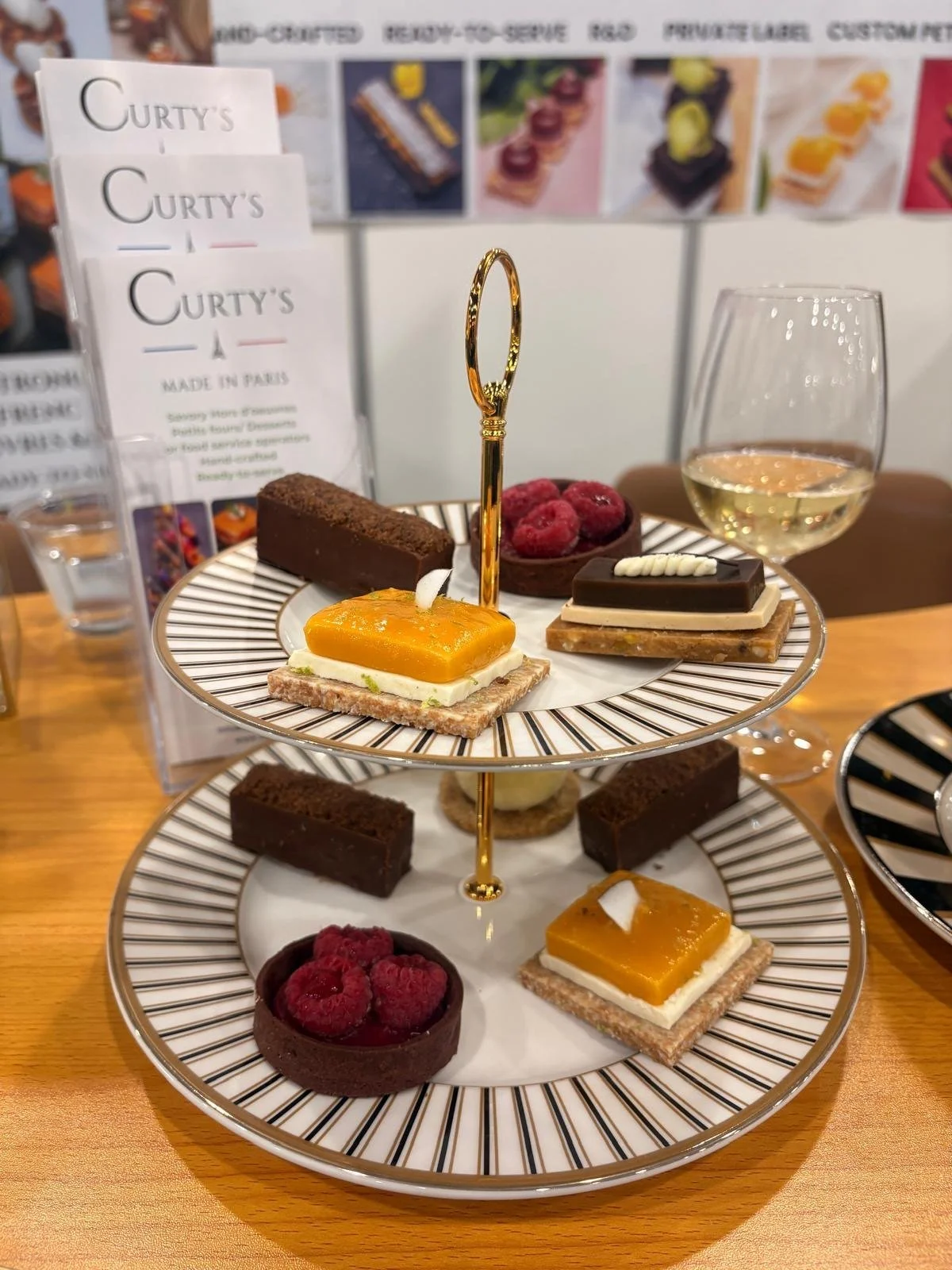
An assortment of modern petits fours on a tiered stand.
Today's petits fours go far beyond vanilla sponge in pastel fondant. The 2026 to 2027 Curty's USA collection includes pieces such as a Mango Passionfruit Mini Puff, a Mini Crème Brûlée on a hazelnut streusel base, a Litchi and Rose and a Mini Chocolate Fondant with a molten hazelnut praline center. Terms such as mini desserts and bite size desserts are now common alongside the traditional name.
Petits fours suit the way people entertain. Guests move around, hold a drink and want variety without committing to a full slice of cake. Common uses include:
Weddings and receptions: a dessert table that works for standing guests.
Corporate events and client receptions: polished, no plates or cutlery needed.
Hotel afternoon tea and brunch: small pieces suit tiered stands.
Cocktail hours: savory and sweet pieces together on one tray.
Airline and premium service: finished pieces that need no plating.
For a step by step guide to building a display around them, read our article on how to build a French grazing table.
How to Choose and Serve Petits Fours for an Event
Choosing petits fours is easier with a simple method:
Mix the families. Combine glazed, fresh and savory pieces, so the tray has color, texture and a balance of sweet and salty.
Balance the flavors. Pair fruit pieces with a chocolate piece and one classic, such as a crème brûlée or a tartlet, so there is something for every guest.
Think about dietary needs. Ask for gluten free and dairy free options early, and label them on the table.
Add height and color. Tiered stands and risers make a modest quantity look generous, and grouping pieces by color makes a tray look designed.
Keep it effortless. Choose pieces that arrive finished, so nobody has to plate, cut or assemble at the last minute.
A petit four is a promise of care in a single bite. When the piece is made well and presented simply, it carries an event far beyond its size.
Curty's USA: Petits Fours Handcrafted in Paris
Curty's USA brings the petits fours and hors d'oeuvres of Laboratoire Curty's to the American food service market. Every piece is handcrafted in Paris by French pastry chefs, flash frozen and vacuum sealed the same day, and stocked in the USA for caterers, hotels, restaurants, venues and airlines. The range includes gluten free and dairy free options, mixed platters, and R&D and private label programs for custom flavors, shapes and sizes.
Small in size, not in the amount of technique behind them. Browse the Sweet Petits Fours Collection, explore the Savory Hors d'Oeuvres Collection, or get in touch to bring petits fours to your next event.
Petit Four FAQ
What does petit four mean?
It is French for "small oven." The name comes from baking small pastries in the cooling heat of a large oven, not from the size of the pastry.
How do you pronounce petit four?
In French it is close to "puh tee foor." In North America, "PET ee for" is common. The plural is petits fours.
Are petits fours sweet or savory?
Both. Glazed, dry and fresh petits fours are sweet, and petits fours salés are savory appetizers.
What is the difference between a petit four and a mignardise?
The terms overlap. A petit four is baked. A mignardise is any small sweet served at the end of a meal, which can include chocolates and mousses.
What are the main types of petits fours?
Glacé (glazed), salé (savory) and sec (dry), plus frais (fresh) in French pastry.
Where can I buy petits fours wholesale?
Curty's USA supplies caterers, hotels, restaurants, venues and airlines with handcrafted French petits fours stocked in the USA. Contact us for the catalog and samples.