

How to Build a French Grazing Table for Your Next Event
Walk into a carefully hosted party this year and you may notice the buffet line has quietly disappeared. In its place is a long, low table of small plates, tiny bites and clusters of color, built for grazing rather than serving. Venues and caterers across the country are calling grazing tables one of the hottest entertaining formats of 2026. Pelazzio, a Houston event venue, says they have moved from restaurants and cookbooks to everything from micro weddings to celebrations of 300 guests. They turn food into the centerpiece of the room instead of an afterthought beside it.
But the best grazing tables are not just bigger cheese boards. They are curated. This guide shows how to build a French grazing table around petits fours and hors d'oeuvres, pieces designed from the first bite to be beautiful, portioned and hard to walk past twice. It works for weddings, corporate receptions, showers, holiday parties and any event where guests mingle.
Why a Grazing Table Works
Randy Peters Catering, a California caterer, sums up the appeal in its 2026 trends guide: guests sample flavors at their own pace instead of waiting in line or sitting through formal courses. Pelazzio adds that guests move around, mingle and return for more, so the party keeps its energy. For hosts that means less pressure on timing, no rigid seating chart for the food, and a display that doubles as decor.
Guests choose for themselves. That makes it easier to cover gluten free, dairy free and other dietary needs.
The party keeps moving. People circulate instead of waiting for courses.
It photographs well. A good table becomes a focal point before anyone has taken a bite.
It scales. The same format works for twenty guests or several hundred.
Why French Bite Size Works So Well
A grazing table lives or dies on variety without chaos. Every item has to stand out while still feeling part of the same story. French mini pastry does this almost by default. Each piece is finished, uniform and portioned for one or two bites, so nothing needs cutting, plating or last minute assembly.
A savory hors d'oeuvres selection gives you the salt and texture side of the table. A sweet petits fours collection covers the indulgent pieces guests reach for last. Both come from the same craft standard, so the table reads as one design.
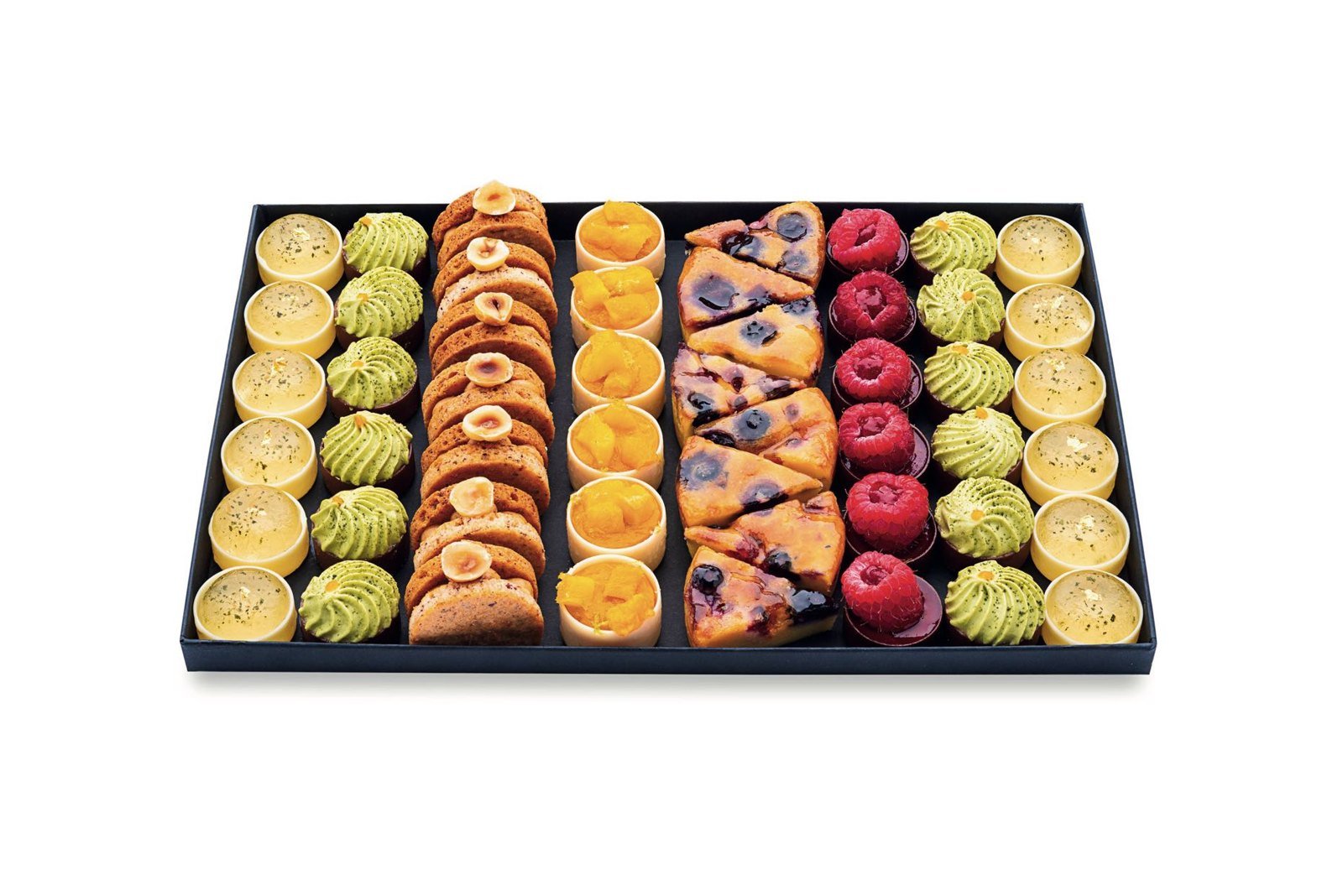
A tray of mixed petits fours is a ready made sweet corner for a grazing table.
How to Build a French Grazing Table, Step by Step
Set the guest count and the role of the table. Is it the whole meal, a cocktail hour or a sweet ending? Randy Peters notes grazing tables work as a substantial part of a menu or alongside plated dinners and late night bites, so decide this first.
Choose a savory anchor. Place a mixed savory platter at one end: canapés, mini burgers, wraps and mousse filled puffs, grouped by color and height rather than by type.
Add a sweet corner. Petits fours and glazed mini cakes, kept slightly apart so flavors do not compete on the plate or the palate. Pelazzio suggests a secondary table just for bite size desserts and pastries, which works well for larger events.
Build height. Pelazzio recommends crates, marble slabs and tiered stands for a cascading look. Risers, small boards and tiered stands make the table read as a landscape, not a flat grid.
Add natural touches. Dried flowers, linen runners, fresh herbs and fruit tie the table together without competing with the food.
Label everything. Cards for each item, with gluten free and dairy free marked clearly, let guests serve themselves with confidence.
Place serving tools. Tongs, small plates and napkins at both ends of the table prevent a queue.
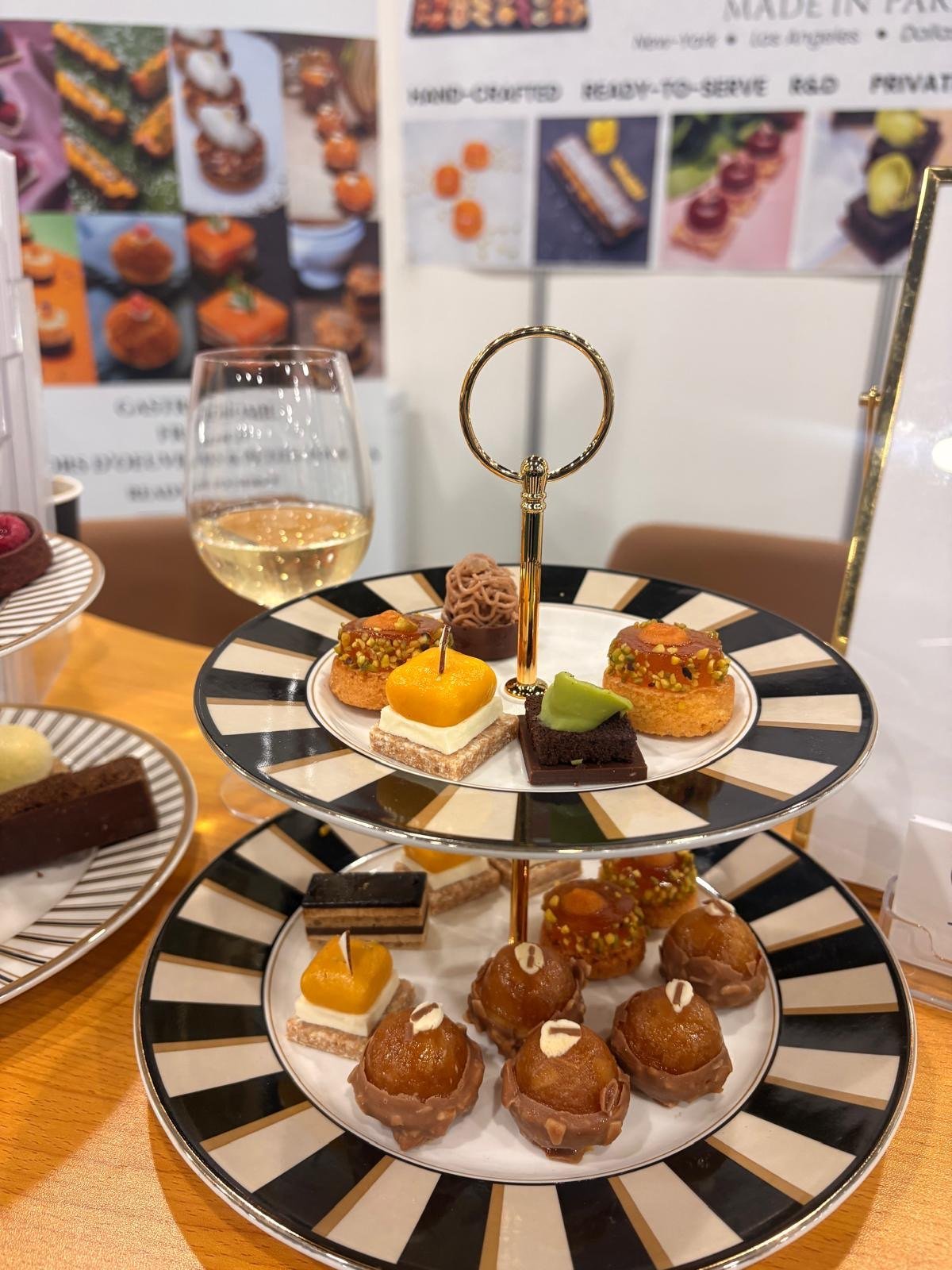
A tiered stand adds height and turns a few petits fours into a centerpiece.
Sweet and Savory: Plan the Flow
Think about how a guest moves. Savory bites near the entrance or bar, desserts further along, so guests meet the main flavors in a natural order. Keep strong savory flavors away from delicate sweets, and give the dessert corner its own space so people can linger there.
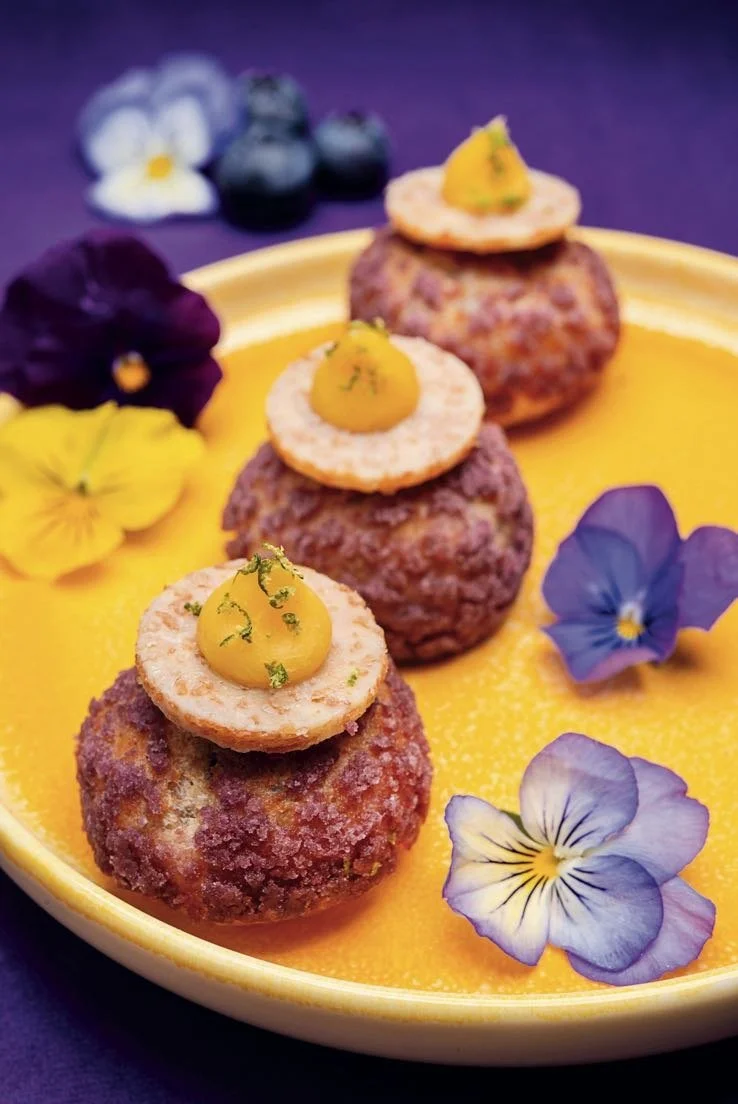
Small touches, such as edible flowers, make finished bites look styled.
Variety is the point, so mix textures and colors: crisp and soft, fruit and chocolate, citrus and caramel. Both mixed and single flavor platters have a place. Mixed platters suit open service. Single flavor platters work for a tasting stand or a themed corner.
Practical Notes for Hosts
Small, finished bites solve the two things that usually stress hosts: timing and mess. Nothing needs to be sliced or plated to order, so the table can be styled before guests arrive. Each piece is complete on its own, so there is none of the half eaten dessert you get with a sheet cake or a whole tart.
Keep the table looking abundant. Pelazzio's advice is that a table should never look picked over: have someone watch it, refill low platters and remove empties. Plan a backup tray for the dessert corner, because it is the first thing guests photograph and the last they want to find empty.
Choose items that suit the room too. Pelazzio recommends avoiding foods that spoil or melt quickly at room temperature, which is another reason finished petits fours and canapés are easier than most of the usual table items.
Grazing Table Checklist
Guest count and service style confirmed
Savory platters chosen (mixed or single flavor)
Sweet platters chosen (mixed or single flavor)
Gluten free and dairy free options included and labeled
Tiered stands, risers or boards ready for height
Tongs, plates, napkins and labels in place at both ends
A backup tray set aside for refills
Someone assigned to watch and refresh the table
A photo of the finished table taken before guests arrive
For Caterers, Venues and Planners
The same table is a repeatable product for caterers. Because every piece arrives finished, a team can build a full grazing display without pastry staff or a second kitchen. Curty's USA handcrafts its hors d'oeuvres and petits fours in Paris, flash freezes and vacuum seals them the same day, and stocks them here in the USA. The Caterer Collection offers mono and mixed platters, gluten free and dairy free options, and private label and R&D programs for custom flavors, shapes and sizes. One supplier can cover both the savory and sweet sides of a table, instead of sourcing from three different bakeries.
Grazing Table FAQ
What goes on a French grazing table?
A mix of savory hors d'oeuvres and sweet petits fours, styled with height, fresh touches and clear labels. Cheese and charcuterie can sit alongside, but the French pastry is what makes it distinct.
Can a grazing table replace a meal?
It can be a substantial part of a menu when it is well planned, and many hosts pair it with stations, plated courses or late night bites. Contact us and we will help match quantities to your event.
Can I include gluten free and dairy free options?
Yes. The Caterer Collection includes gluten free and dairy free items, and gluten free mixed platters are available. Label them clearly on the table.
How far ahead should I plan?
Randy Peters suggests starting wedding catering plans 9 to 12 months out in peak seasons. For smaller events, a few weeks is usually enough. Contact us to confirm lead times.
Where are Curty's USA products made?
They are handcrafted in Paris and stocked here in the USA.
Sourcing the Table
Browse the full range in the Savory Hors d'Oeuvres Collection and the Sweet Petits Fours Collection, or get in touch if you are planning an event and want help building the right mix for your guest count.