

Luxury catering is a promise made to a client and repeated in front of their guests: the food will look beautiful, taste exceptional and arrive exactly when it should. The dessert course is where that promise is easiest to break. It needs skilled hands, careful finishing and a steady supply, all at the busiest time of the evening.
For a caterer who handles large volume every month, building that supply in house means a pastry team that grows with every new contract. This guide explains how an outsourced pastry partner can act as your pastry chef at volume, how to set up a monthly dessert program, and how to protect your margin while keeping a signature look.
What Luxury Clients Expect From Dessert
A premium client is rarely asking for more food. They are asking for a better moment. In practice that means:
A signature. A dessert guests remember and ask about, not an item from a standard list.
Finish and presentation. Small, precise pieces that look styled on a tray, a stand or a passed platter.
Consistency. The same quality at a dinner for forty and a gala for four hundred.
Dietary care. Gluten free and dairy free pieces that look as good as everything else.
Reliability. Nothing is late, nothing is missing, nothing looks different from the tasting.
Most luxury caterers can deliver all five on a good week with a full team. The challenge is doing it every week, across every contract, while volume grows.
The Volume Problem
Catering is growing. One 2026 trends report from the catering software company Curate cites forecasts of a 6.2% compound annual growth rate to more than $124 billion by 2032, and says a majority of corporate buyers plan to increase spend, with many ordering monthly or weekly. Those are forecasts, and the report is from a software vendor, so treat the numbers as a direction rather than a promise.
The same report points to an uncomfortable gap. In one industry report it cites, 98% of catering operators named labor costs as a major concern, 86% said they were understaffed, and 57% said growing catering sales had been a struggle. In other words, demand is rising while the people to serve it are scarce. Our earlier post on why caterers and hotels are outsourcing pastry programs covers the staffing figures in more detail.
For a luxury caterer, the result is a choice. Say no to volume, or find a way to deliver pastry without adding a pastry team for each new contract.
What an Outsourced Pastry Partner Does, and What It Does Not
An outsourced pastry partner takes over production, not creativity. The pieces are made by pastry chefs, finished by hand and frozen. You keep the parts clients actually see: the menu concept, the tray styling, the stands, the plating and the service.
At Curty's USA, pieces are handcrafted in Paris, then frozen and vacuum sealed the same day, and stocked in the USA, with inventory in New York, Los Angeles, Dallas and Miami. They arrive finished and ready to serve.
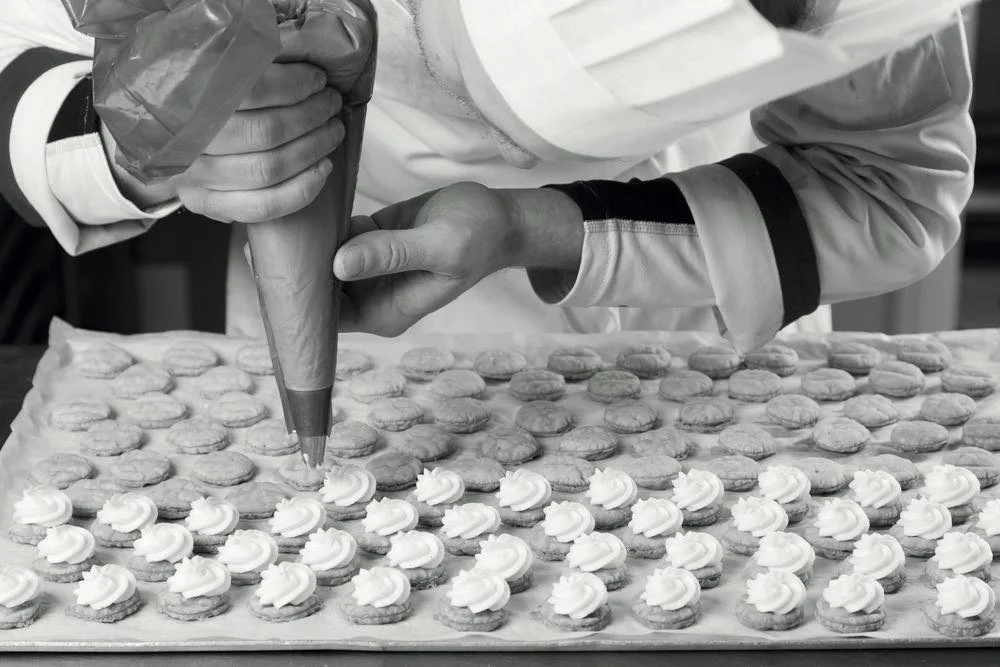
Production is by hand, in Paris, before the pieces are frozen and sealed.
That model fits a luxury caterer for three reasons. The hand finished look carries through to the tray. The format is small, which suits passed service and stands. And frozen storage means you can hold stock for events without baking against the clock.
Build a Monthly Dessert Program
If your volume is steady, a program works better than one off orders. A simple structure:
Choose an anchor menu. Pick six to eight pieces that cover your usual events: two chocolate, two fruit, one cream or caramel, one crisp, and a gluten free option.
Set par levels. Decide how many boxes you keep in the freezer so that a last minute booking does not become an emergency.
Place a standing order. Order on a regular rhythm tied to your event calendar, and top up before peaks.
Rotate seasonally. Swap one or two pieces each season, such as fruit in summer and chocolate or caramel in winter, so repeat clients see something new.
Add one signature. Use R&D to create a piece that only your company serves.
If you buy in volume each month, tell us your numbers when you contact us so we can talk through how to plan it. Minimums and timing depend on the products and on any custom work.
Mix Formats to Match the Event
A luxury caterer rarely serves one kind of event, so the range needs to flex. The Caterer Collection is made for this, with bite size hors d'oeuvres and desserts, available as mono or mixed platters, plus gluten free and dairy free options.
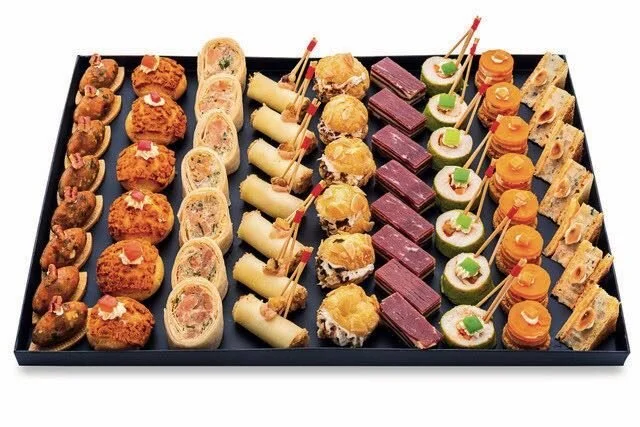
A mixed savory platter, ready to serve straight from thawing.
Cocktail receptions. Savory pieces and bite size sweets on passed trays.
Plated dinners. A medium or lunch size dessert for a finished course.
Dessert tables and stands. Mixed platters with a variety of colors and textures.
Premium suites and VIP service. Small, styled pieces that suit close up service.
See how this works for suites in our guide to corporate events and premium suites, and how to style a spread in our post on building a French grazing table.
Protect Your Margin
Dessert is one of the easier places to control cost, because a finished piece has a known price. The Curate report notes that many successful caterers target a food cost of roughly 28% to 35%, depending on market and positioning. A simple method turns that into a menu price.
Divide your cost per piece by your target food cost percentage. As an illustration only, not Curty's USA pricing: a piece that costs $1.00 at a 30% target food cost would be priced at about $3.33 on the menu. Because the cost per piece does not change with a good or bad week in the kitchen, the margin is easier to hold.
Contact us for a wholesale price list so you can run your own numbers.
Proof in a High Volume Setting
A caterer is right to ask whether a supplier can handle demanding environments. Curty's USA collaborates with MetLife Stadium on desserts for its Suites and Clubs, a high volume setting with no room for error, and presents to airline and hospitality buyers at trade shows such as IFSA in Dallas.
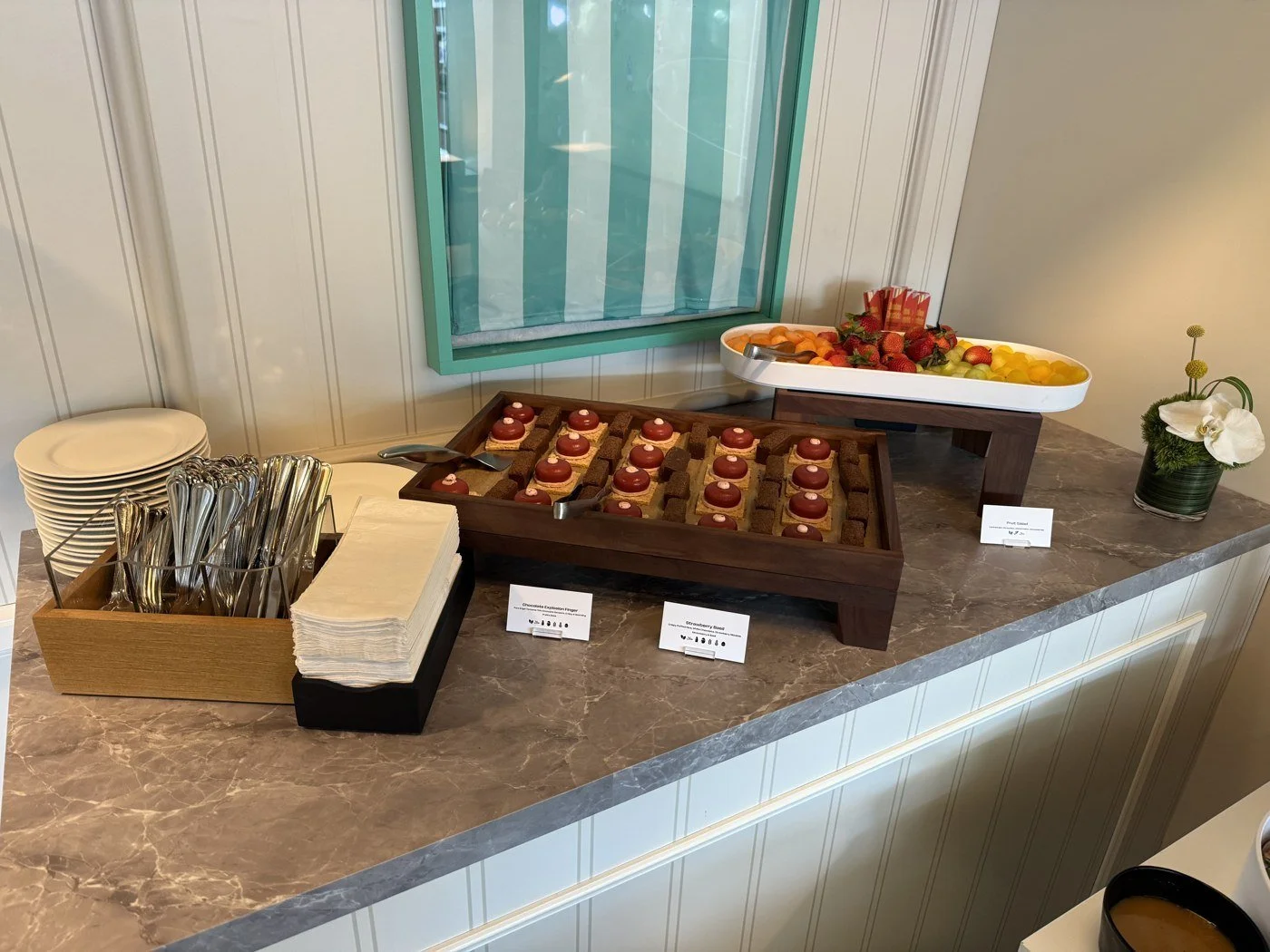
Small desserts served on a counter in a premium suite, ready to serve.
Event Day Handling
Frozen storage rewards a simple routine. For platters, Curty's USA guidance is to remove them from storage at minus 18 degrees Celsius (0 degrees Fahrenheit), take off the bag, and refrigerate at 0 to 4 degrees Celsius (32 to 39 degrees Fahrenheit) at least four hours before serving. For best quality, serve within 24 hours after defrosting, and never refreeze a defrosted product. Build the thaw into your prep schedule the day before, and keep a spare tray for refills.
Run a Tasting That Wins the Contract
A tasting is often where a luxury client decides. A ready to serve line makes it easier to get right.
Plan the tasting like the event. Use the same trays, plates and stands the client will see on the day.
Show range, not a single piece. Offer a savory selection, three or four sweets and a gluten free option, so the client sees the full menu.
Include your signature. If you are working on a custom piece through R&D, show a sample so the client sees what only you can offer.
Thaw to schedule. Follow the thaw steps above so the pieces are at their best when the client arrives.
Write down the feedback. Note which pieces the client picks and why, and build the event menu around those.
Common Mistakes When Outsourcing at the Luxury Level
Treating it as a cost cut only. The aim is consistency and capacity, not a cheaper version of your standard. Choose a partner whose finish matches your brand.
Skipping the tasting. Never add a new dessert to a client menu without trying it on your own plates.
Ordering at the last minute. A frozen program works best when you plan par levels ahead of your busy weeks.
Hiding the partnership from your team. Brief your chefs and service staff on what arrives finished, so the plating is confident and consistent.
Forgetting dietary pieces. Add gluten free and dairy free options to the standing order, not only to special requests.
Questions to Ask Any Pastry Supplier
Is the product finished and ready to serve?
Where is it stocked, and how quickly can you reorder?
Can I taste samples before committing?
Can you build a signature piece for my company?
What are the minimums, and how do they change with volume?
How are gluten free and dairy free pieces handled?
Luxury Caterer Dessert FAQ
Can Curty's USA act as my outsourced pastry chef?
We handle production. Pieces are handcrafted in Paris and arrive finished and ready to serve, and you keep the menu, styling and service.
Can you support a large monthly volume?
Tell us your expected monthly volume and event calendar, and we will talk through how to plan it.
Can I have a signature dessert only my company serves?
Yes. R&D and private label programs are available for custom flavors, shapes and sizes.
Do you offer gluten free and dairy free pieces?
Yes. The Caterer Collection includes gluten free and dairy free options.
Where is it made and stocked?
Handcrafted in Paris and stocked in the USA, with inventory in New York, Los Angeles, Dallas and Miami.
Add a Signature Dessert Line to Your Menu
If you run a luxury catering company and want a dessert line that scales with your volume, talk to us about samples, formats and a monthly program. You can also download the catalog or browse the collections.
Looking for a wholesale petit four supplier? See our wholesale page or download the catalog.